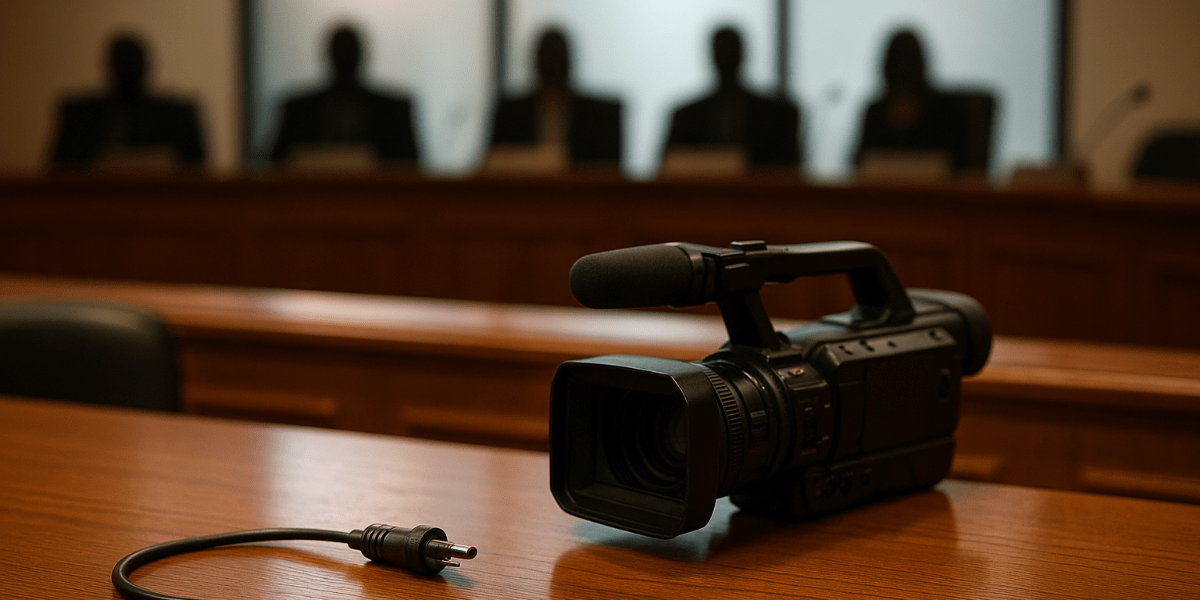
LORAIN — Lorain City Council’s latest committee meeting revealed deep divisions over transparency, public access, and how tightly the city should control its own chambers. The discussion unfolded during the Police, Fire and Legislative Committee meeting on Monday, which was scheduled for a routine review of the city’s Rules of Council. These rule revisions happen periodically, and they determine how meetings are recorded, how public input works, and what authority the council president holds. Because livestreaming, media access, and chamber order all fall under those rules, the conversation naturally expanded into broader questions about accountability and the public’s right to observe city business.
What began as a procedural housekeeping session quickly turned into a tense debate over whether Lorain should continue livestreaming its meetings at all, whether the rules should impose new restrictions on media, and whether the chamber should add a sergeant at arms or a parliamentarian. Some members felt these ideas would make City Hall less accessible rather than more open.
Members Divided on Cutting Livestreams
Several council members expressed concerns about ending livestreaming. They warned that shutting off remote access could erode trust even if council is not conducting business improperly.
Victoria Kempton, Second Ward Councilwoman, offered a strong objection to ending the practice.
“It’s offensive to demand engagement and then remove the one tool people actually use,” she said. “Live streaming benefits residents and even elected officials who can’t always attend. The idea that only those with the time and privilege to sit through hours of meetings deserve access to information is wrong, and I strongly oppose taking this tool away from our community.”
Councilwoman Mary Spellacy and Councilwoman Sylvia DuVall also urged keeping livestreams in place. They cautioned that eliminating public access could worsen public perception and create suspicion even when council is conducting its business appropriately.
Members Citing Equipment, Liability, and Cost Concerns
Others pointed to technical and financial challenges as reasons to reconsider livestreaming. Councilwoman Pamela Carter and Councilwoman Mary Springowski, Council At-Large, raised issues with failing microphones, poor audio, buffering, and inaccurate closed captioning. These problems lead to complaints and even legal threats.
Springowski was candid about the no-win situation the city finds itself in.
“People complain that the sound is bad, that it buffers, that the closed captioning is wrong, and then we’re threatened with getting sued over it. We can’t win.”
She emphasized that she supports transparency, but meaningful transparency requires better tools.
“I want the transparency. I really do. But we need the right type of equipment and the right type of program for livestreaming to be meaningful.”
Springowski added that constant criticism puts the city in a position where every option feels like the wrong one.
“We’re damned if we do and damned if we don’t. If what we’re giving people isn’t acceptable, then they say just do away with it, so then we won’t do it.”
Concerns About Media Rules and Chamber Control
In addition to livestreaming, the committee discussed proposed rule changes involving media credentialing, the creation of a sergeant at arms, and possibly adding a parliamentarian. These suggestions raised broader concerns about whether council was moving toward a more restrictive or controlled environment for both journalists and residents.
Some members pushed back against tightening rules too aggressively. They argued that council should be cautious about creating the appearance, or the reality, of limiting public access.
A Debate That Signals Larger Tension
Although the meeting was framed as a routine rule review, the tone and content revealed something deeper. The city appears to be struggling with how to balance order inside the chamber with the public’s expectation of transparent government. The decisions council makes in the coming weeks will determine not only the future of livestreaming but also the overall tone of public participation in Lorain, potentially for years to come.