Members question penalties, outside access

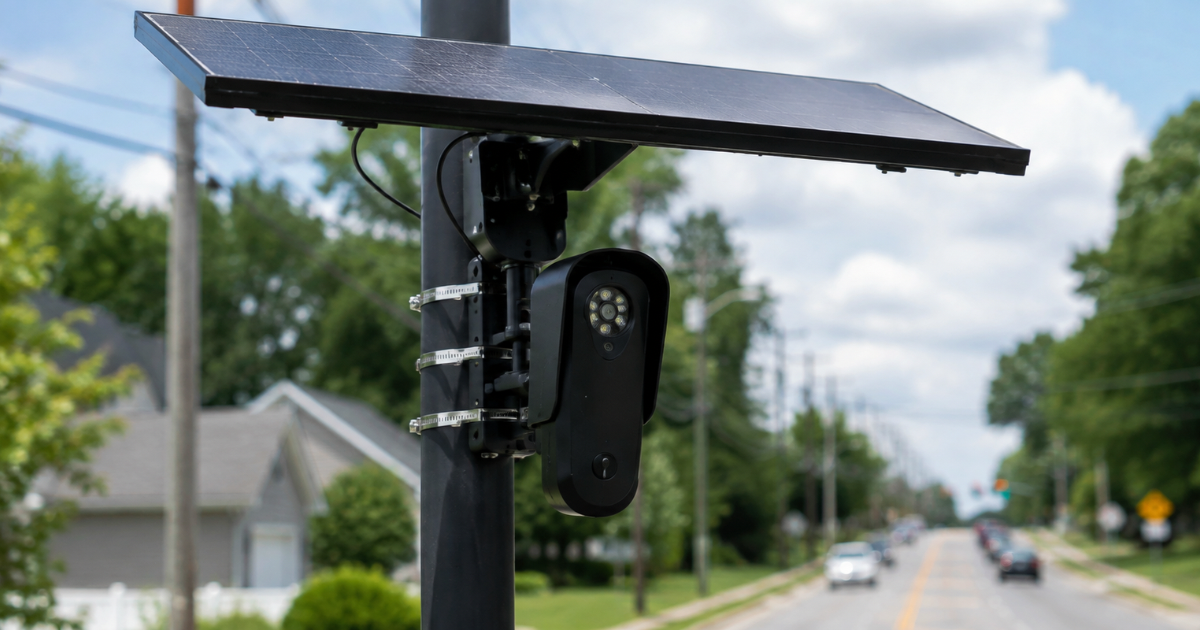
VERMILION — City council members expressed broad support Monday for preventing Vermilion from installing Flock Safety automated license plate readers but disagreed over whether police should be prohibited from using data collected by other agencies.
Council discussed Ordinance 2026-46 during its Legislative Committee meeting Aug. 17 before the proposal received its second reading during the regular meeting.
No final vote was taken. Members discussed revising the legislation and holding a work session before taking further action.
Councilman Drew Werley, who represents Ward 3, authored the ordinance, which would prohibit the installation, operation or use of automated license plate readers in Vermilion. It would also prevent government entities from purchasing, leasing, accessing or participating in data-sharing agreements involving the technology.
The proposal would prohibit city money from being spent on the systems and require unlawfully collected data to be destroyed. Contracts entered into in violation of the ordinance would be void.
Violations would be strict-liability first-degree misdemeanors punishable by up to 180 days in jail, a $1,000 fine or both.
Werley said he deliberately wrote the ordinance as restrictively as possible and expected other members to propose any exceptions they believed were necessary.
“I’m not going to give you any exceptions,” Werley said. “If you guys want to put exceptions in there, you can fight for those. I’m not going to negotiate against myself.”
Werley said the city’s previous Flock proposal was withdrawn after residents raised privacy concerns, but he argued council never took formal action to prohibit the technology.
He said the previous police chief discussed potentially seeking outside funding, which did not address residents’ objections to the cameras themselves.
Werley said the ordinance is intended to prevent a future police chief, mayor or council from reviving the proposal regardless of whether city money or grant funding would pay for it.
Several council members agreed Vermilion should not purchase or install the cameras but questioned whether the ordinance could interfere with investigations involving information collected elsewhere.
Councilman Greg Drew, who represents Ward 2, said he spoke with Police Chief Scott Holmes, who has no intention of requesting Flock cameras or entering into a contract for another license plate reader system.
Drew said he would fully support a straightforward prohibition against Vermilion entering into such a contract. However, he objected to language that could make it a crime for a Vermilion officer to ask another agency to search its system during a serious investigation.

Council members raised examples involving a missing child, a person seriously injured or an investigation crossing jurisdictional boundaries. They also questioned how the ordinance could affect state or county officers using vehicle-mounted readers while traveling through Vermilion or assisting city police.
Vermilion police Chief Scott Holmes cited a previous Pizza Hut armed robbery investigation in which license plate reader information from another jurisdiction helped distinguish a suspect’s vehicle by a decal in its rear window. The information contributed to identifying the vehicle, which was later located in Knoxville, Tennessee.
Councilman Homer Taft, who represents Ward 4, expressed concern about private companies collecting and controlling information about motorists. However, he indicated he might view a locally controlled system with limited data retention differently from a privately operated national network.
Councilman John Gabriel, who represents Ward 1, described the technology as a useful investigative tool but acknowledged the potential for misuse. He said he did not want to prevent police from requesting assistance from another agency during a major investigation.
Werley acknowledged the cameras can help solve crimes but argued their usefulness does not justify continuously collecting information about people who are not suspected of wrongdoing.
He also raised concerns about incorrect plate readings, armed traffic stops involving innocent motorists and private control of the information.
Werley later said he included the first-degree misdemeanor provision to provoke discussion and never expected the penalty to remain in the final version unchanged.
Residents Aaron Weaver, Sean Jenkins Houk and Sue Owens spoke in support of the prohibition.
Weaver urged council to err on the side of individual liberty and warned that surveillance powers granted to responsible officials today could be misused by future governments.
Jenkins Houk argued that accessing large collections of vehicle-location information without a warrant raises Fourth Amendment concerns and could expose the city to litigation.
Owens drew upon her Polish family’s experiences under authoritarian governments and said surveillance systems that initially appear useful can become dangerous when placed in the wrong hands.
Issues identified for further discussion included the criminal penalty, police access to information held by other agencies and language addressing outside officers traveling through or assisting in Vermilion.
Werley said there was time to address those questions because the current police chief is not seeking the technology.
“I’m in no rush to pass this because it doesn’t sound like we’re in a rush to put them up,” Werley said.
Related posts:

 BREAKING: Manhunt Ends as James Douglas Meadows is Apprehended in Lorain County
 Lorain County Welcomes New Correctional Officers
 Prosecutor Cillo’s Graduation Message: Safety Focus