ELYRIA — The Lorain County Sheriff’s Office has recently introduced the use of a concealed electronic restraint device in certain high-risk cases as an alternative to visible shackles in the courtroom, according to Corrections Inspector General Ryan Kolegar.

The device, worn on a defendant’s leg and hidden under clothing, is intended to allow deputies to maintain control without visually signaling to a jury that a defendant is restrained. “They have a right not to be prejudiced against the jury. They have a right not to be in restraints, typically,” Kolegar said.
Kolegar explained the device is typically secured around the calf muscle and locked into place. “Typically what we want to do is put it on the calf,” he said, noting the placement is designed to affect balance if activated.
The system is controlled remotely by trained and certified deputies. Before activation, the device emits a warning beep intended to gain compliance. “They get a warning beep first, and then if they still don’t comply, they get the full ride,” Kolegar said.
If triggered, the device delivers a fixed eight-second electrical cycle designed to disrupt muscle control. “It’s eight seconds straight through. No off switch,” Kolegar said, adding that unlike a taser, the cycle cannot be stopped once it begins.
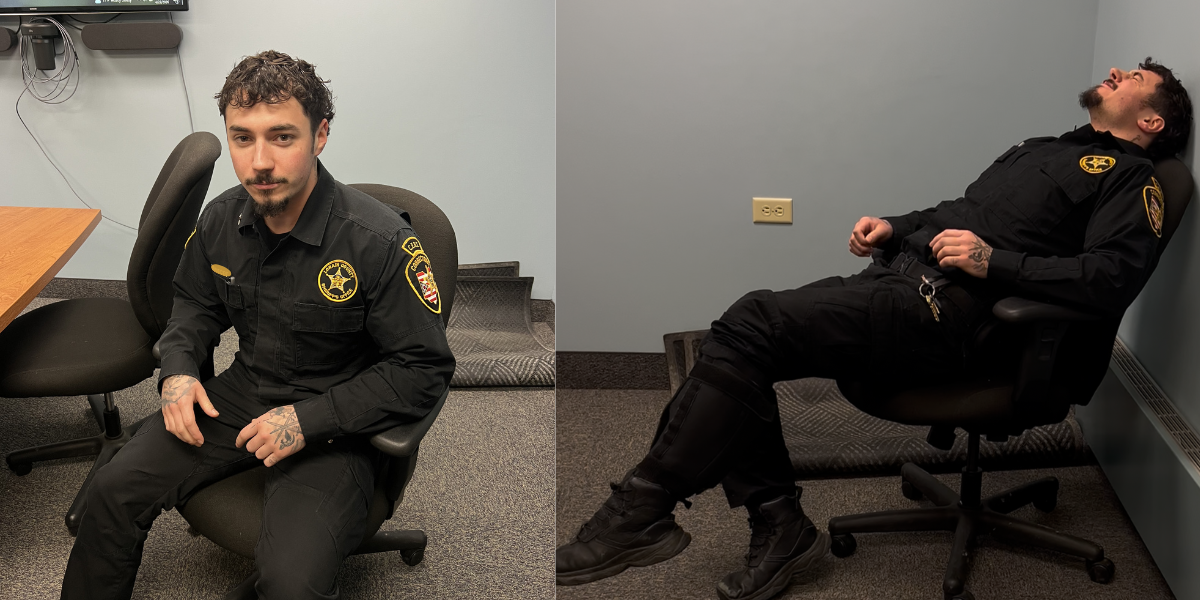
Officials demonstrated how the device is applied and operated, noting that it comes in multiple sizes to ensure a secure fit. Deputies are required to undergo certification and training before using the equipment.

Use of the device is determined on a case-by-case basis, typically involving defendants charged with serious or violent felonies or those with a history of aggressive behavior. Kolegar said the decision is made through courthouse security leadership based on risk.
One example discussed involved a defendant identified as Davidson, who had previously assaulted staff and was scheduled to appear in court without visible restraints. “That’s an individual we need every edge we can provide to level that playing field,” Kolegar said.
Before the device is used, inmates are informed about how it works and what will happen if they fail to comply. While they are asked to sign a waiver acknowledging that information, officials said inmates often refuse. “They’re free to refuse to sign the waiver,” Kolegar said. “What it is is me having paper to explain that they understand that if they act up, they’re going to be zapped.”
Medical considerations are also reviewed before use, and officials said the device is not appropriate for every defendant. “If they’re 95 years old… is that individual really capable of harming someone?” Kolegar said.
According to Kolegar, the devices cost approximately $1,600 each and do not carry ongoing maintenance or subscription costs. “Once you buy it, you’re done. There’s no continual cost to it,” he said.
Sheriff Jack M. Hall oversees the agency, which is headquartered in Elyria. Officials said the device is not used routinely, but has recently been made available for use when circumstances warrant additional precautions in the courtroom.