
Development push continues amid service cuts

ELYRIA — Years of rising county-controlled spending, an aggressive economic-development strategy and a growing series of disputes with elected officials, workers and residents converged Friday during a contentious Lorain County commissioners meeting that included shouting matches, budget arguments and clashes with members of the public.
Tensions were on display as commissioners argued publicly with Sheriff Jack Hall over his budget, revisited a disputed annexation, defended millions of dollars being committed to development projects and sparred with residents during public comment.
The current board consists of President David Moore, who was elected in 2020, Jeff Riddell, whose term began in 2023, and Marty Gallagher, who joined the board in 2025.
County spending grew
County Auditor Craig Snodgrass’ records show spending under departments controlled by the commissioners grew during the COVID-19 pandemic and the years that followed.
Salary spending across commissioner-controlled departments increased from about $4.2 million in 2020 to $5.27 million in 2025, or about 25%. Salaries in the commissioners’ main department increased about 32%, from $2.16 million to $2.85 million during the same period.
That growth has been followed by sharp budget pressure in 2026.
Commissioners began the year with a roughly $89.9 million general-fund spending plan after the 2025 final budget reached about $102.7 million. Several independently elected offices received cuts.
Snodgrass has said his office was funded at its lowest level since 1996 and now closes Fridays, with employees unpaid on those days.
Sheriff challenges funding
Hall’s office has become another flashpoint.
The sheriff’s general-fund personnel budget fell from about $9.54 million in the final 2025 budget to $9.1 million at the start of 2026, a reduction of more than $430,000.
Meanwhile, personnel spending for the commissioners’ Community Development Department increased from about $740,000 to $917,000, an increase of about $177,000.
Hall told commissioners Friday that the dispute goes beyond the total size of his budget. He argued that Ohio law distinguishes between expenses commissioners may choose to fund and statutory duties they are required to support, including jail operations and courthouse security.
Commissioners acknowledged their authority to appropriate county money but disputed Hall’s interpretation of how much funding those mandatory duties require.
Development remains a priority
At the same time, commissioners continue to pursue a major economic-development strategy centered on sewer infrastructure and development in western Lorain County.
In March, commissioners authorized up to $6.025 million in Western Sewer Improvement bond anticipation notes to acquire property and pay engineering costs associated with sewer construction.
The county also is moving forward with a state-backed package of roughly $67 million for infrastructure associated with the proposed megasite.
Those dollars are not necessarily interchangeable with general-fund money. State grants, sewer revenue and borrowed funds can carry restrictions that prevent commissioners from simply moving the money into the sheriff’s payroll or another county office.
Still, the simultaneous development spending and operating-budget reductions have fueled questions about the county’s priorities.
Residents have repeatedly challenged the cost and scope of the megasite and western sewer project during commissioner meetings, including questions about how the county would pay costs beyond the state’s contribution.
Commissioners have openly described development as part of their answer to the county’s financial problems.
During Friday’s meeting, they discussed voters’ rejection of additional taxes and argued that attracting businesses, homes and residents would expand the property- and sales-tax base available to fund county government.
JFS workers remain at odds
Job and Family Services has produced another bitter fight.
UAW Local 2192 workers have sought an additional $1 per hour as part of their labor dispute.
The union says that would cost about $300,000 annually while, based on its analysis of county auditor payroll records, the number of county administrative positions paying at least $100,000 increased from 55 in 2021 to 174 in 2025.
The union says those salaries totaled about $20.3 million last year.
Commissioners dispute the union’s portrayal of the negotiations.
County officials say they negotiated for months, offered wage increases and benefits comparable to agreements accepted by other county bargaining units, and argue the union rejected a reasonable package.
Budget fights move to court
Budget fights increasingly have spilled into court.
Domestic Relations Judge Lisa Swenski has challenged commissioners over funding for the court and Turning Point Youth Shelter.
On Aug. 26, the Ohio Supreme Court denied the commissioners’ request for judgment on the pleadings and granted an alternative writ, allowing evidence and briefs to be filed in the continuing dispute.
Commissioners Moore and Riddell also have been defendants in federal litigation involving Cleveland Communications Inc. over the county’s emergency radio system.
The company made claims including breach of contract, retaliation and constitutional violations. Those claims were allegations, not findings that commissioners committed wrongdoing, and an appeal was dismissed by agreement in May.
Hall also has been locked in a separate dispute with commissioners over county 911 operations.
In April, his office executed search warrants at the county administration building and 911 center as part of a criminal investigation involving county contracts.
Moore publicly criticized the searches as election interference, while the sheriff’s office said investigators were conducting legitimate police work.
No search warrant by itself establishes criminal wrongdoing by a commissioner or county employee.
Public comment turns heated
Friday’s meeting added a free-speech dispute to the list.
During public comment, William Zimmerman criticized Gallagher’s annexation position and called him a “coward.” Gallagher had voted present on a vote to rescind a vote on annexation earlier this week. Moore voted no and Riddell voted yes.
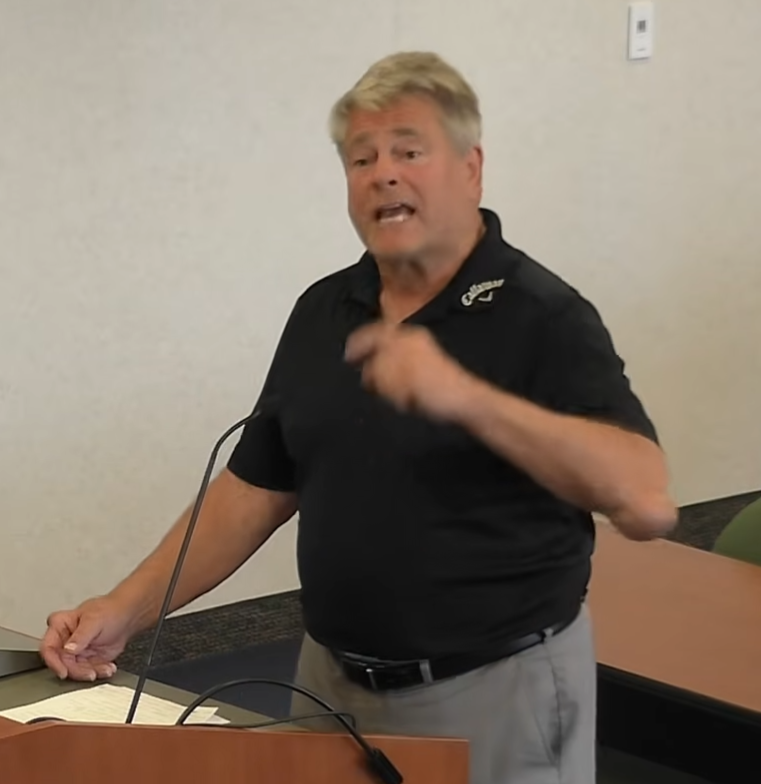
Gallagher responded that another instance of name-calling would result in Zimmerman being removed.
When the sheriff was asked about removing him, Hall said he could not remove the speaker over First Amendment-protected speech.
Lorain County’s written rules allow commissioners to regulate disruptive behavior and require residents to register before speaking. They also prohibit conduct including “personal or abusive language” and name-calling.
Those restrictions raise questions under federal court decisions governing Ohio.
In 2021, the Sixth Circuit Court of Appeals struck down public-comment restrictions on “abusive,” “personally directed” and “antagonistic” speech when they were used to suppress criticism.
In June, the same court ruled that criticism involving terms such as “cowardice” remained protected speech and said government boards cannot discriminate against a speaker’s viewpoint simply because officials consider the remarks insulting.
Neutral registration and time-limit rules remain permissible.
Moore warns speakers
After the public-comment disputes Friday, Moore warned speakers that forms would have to be completed properly in the future.
“In the future, fill out your forms,” Moore said. “If they’re not filled out properly, I’m not going to call you up for public comment.”
The registration requirement itself predates Friday. County records show the form and guidelines were revised in November 2023.
The question going forward will be whether those rules are enforced consistently regardless of whether a speaker supports or criticizes the commissioners.
Related posts:

 BREAKING: Manhunt Ends as James Douglas Meadows is Apprehended in Lorain County
 Lorain County Welcomes New Correctional Officers
 Prosecutor Cillo’s Graduation Message: Safety Focus